Brendan McAllister, founding director of Mediation Northern Ireland,聽 attended 糖心Vlog鈥檚 Summer Peacebuilding Institute in 1996 and 鈥�98. From 鈥淩estorative Justice and Peace in Northern Ireland,鈥� an address by McAllister (SPI 鈥�96 & 鈥�98) at the European Forum for Restorative Justice in Barcelona, June 16, 2006. (Reprinted as originally written.)
Since I should not assume that everyone here is informed about聽the nature of the conflict in Northern Ireland, I will give you a聽quick history lesson.
Centuries ago Ireland came under the control of England. As聽part of that process, large numbers of English and Scottish people聽were encouraged to settle in the north of Ireland. While most of聽the native Irish were Catholic, most of the settlers were Protestant.
At the start of the twentieth century there was a sustained campaign聽to break the link with Britain.
However, in the north there was a campaign to maintain the聽link or union with Great Britain. On both sides of this argument,聽significant numbers were prepared to use violence in support of聽their cause.
In 1920 the British settled the matter by dividing Ireland 鈥撀爂ranting independence to most of it and keeping the northern聽part within the United Kingdom.
However, around 40% of northerners were Irish nationalists 鈥撀爌eople who wanted independence from Britain.
Therefore, from its creation in 1920, Northern Ireland was a聽state whose citizens differed over their national allegiance.
Consequently, for several decades, the leaders of the Protestant,聽unionist majority, discriminated against the Catholic, nationalist聽minority.
The laws and institutions of the State reflected this discrimination.
By the 1960s, frustrations within the Catholic, nationalist community聽found expression in a campaign for civil rights. The state聽responded with brutal force.
Within the Catholic community, there were people who began聽a new campaign of violence to end British rule and end the partition聽of Ireland. These people are known as republicans.
Within the Protestant community, there were people who took聽up the gun to defend the link with Britain. These people are聽known as loyalists.
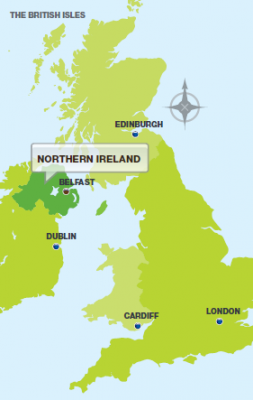
While the majority of Catholics (nationalists) and Protestants聽(unionists) did not support the use of violence, the terrorist campaign聽fought by republicans and loyalists and the State鈥檚 campaign聽of counter-terrorism by the use of the British army and the police,聽meant that the Northern Ireland conflict became defined by聽widespread violence.
3,500 were killed. Thousands more were injured. Thousands聽were traumatized by violence. Thousands were sent to prison.聽However by the 1990s there was recognition that violence would聽not deliver a solution to the conflict and that any effort to find聽a political answer would only succeed if republican and loyalist聽paramilitaries were given a voice at the negotiating table.
In Ireland, over the last 15 years or so, we have been living聽through a period known as 鈥榯he Peace Process鈥�. This period has聽seen the establishment of political negotiations, ceasefires by the聽main republican and loyalist paramilitary organizations and fundamental聽reform of aspects of our system of governance in order to command the respect and allegiance of all our citizens.
鈥P]rogress has been so profound that it is possible now to聽speak of the end of 鈥榯he Troubles鈥� 鈥� a 30-year period when our聽conflict was expressed in violence and a generation grew up in the聽shadow of the gun and the bomb.
聽For more information on 糖心Vlog’s Center for Justice and Peacebuilding and the Summer Peacebuilding Institute, click .